
When Rules Repeat: The Fixed Point Ladder
Repeated rules, from stability to chaos and self-reference
A seven-part series on repeated rules, fixed points, attractors, chaos, fractals, power laws, non-ergodicity, number theory, self-reference, life, and markets.
On the image Each floret is a smaller copy of the whole head, and each of its florets a smaller copy again. The plant is one growth rule applied to its own output, which is the ladder this series climbs. A head of Romanesco broccoli. Photo: Ivar Leidus, CC BY-SA 4.0, via Wikimedia Commons.
Start with a rule and apply it again. Sometimes the rule settles. Sometimes it cycles. Sometimes it folds the state space until chaos appears. Sometimes the invariant object is no longer a point but a set, a probability law, a type, a program, a proof, a lineage, or a market regime.
This series follows that shape through several mathematical worlds. I am not trying to prove that a market, a proof, a fractal, and an organism are all secretly the same thing. They are not. The useful pattern is smaller and stranger: again and again, you ask what space a rule acts on, what the rule does, and what survives being acted on.
Read the essays in order. The word “fixed point” changes level as the series moves. At first it means a number unchanged by a function. Then it becomes a point, cycle, or basin in a state space. Then a fractal set, a probability distribution, a scaling law, a torus, a sentence, a program, a type, a lineage, and finally a market regime. The objects change. The question keeps coming back:
what transformation acts here, and what object does it leave invariant?
You do not need every theorem detail on a first pass. Track three things: the space, the transformation, and the invariant object. That is enough to follow the climb. The proofs and formulas are there when you want the harder version.
There are really two kinds of repetition in the series. The first is ordinary iteration: apply a rule again and again, and watch what it settles into. The second is self-reference: a system becomes rich enough to represent something about itself, then acts on that representation. Keeping those apart prevents a lot of bad metaphor.
Two examples keep the metaphor honest. Peano arithmetic is expressive enough to talk about its own sentences, but it does not fluctuate; self-reference gives it Gödel sentences, not fat tails. A sandpile gives you scale-free avalanches, but it represents nothing. Iteration gives fixed points of state. Self-reference gives fixed points of description. Biology and markets become interesting because both are present at once: the system has dynamics, and some of its internal descriptions feed back into those dynamics.
#The Whole Argument
The series is long, so here is the path before the details begin. Each essay chooses a space, chooses a transformation, and asks what it leaves invariant. Arithmetic sits in the middle because it belongs to both sides: it measures recurrence in dynamics, and it lets syntax encode itself in logic.
Engine A, iteration.
repetition → invariance → state fixed points → attractors → bifurcations → chaos → invariant sets → invariant measures → scale invariance → power laws → extreme dominance → non-ergodicity → recurrence → arithmetic
Engine B, self-reference.
arithmetic → encoding → self-reference → representational fixed points or impossibility → recursion and undecidability
Applications.
life and markets, the systems where both engines interact.
The phrase “fixed point” appears twice on purpose. The first time it means a state fixed point: a point $x^\star$ unchanged by a dynamical rule, $f(x^\star)=x^\star$. The second time it means a representational fixed point: a sentence, program, proof, type, or construction that folds back onto its own description. Same abstract equation, $T(x)=x$, different level. The first belongs to Engine A, iteration. The second belongs to Engine B, self-reference.
The ladder begins with fixed points of dynamics and ends with fixed points of self-reference. Same abstract shape, one level up.
Read left to right, that is the climb. Repeated rules create invariant objects. The simplest one is a fixed point; once nearby states fall into it, it becomes an attractor. Vary a parameter and attractors are born, move, split, or disappear. Push that far enough and you get chaos. Chaos does not remove invariance; it leaves stranger invariants behind: fractal sets in state space and invariant measures in probability space. Those measures lead to scale invariance and power laws. Power laws move importance into the extremes. Extremes through time break the comfort of ensemble averages. A single trajectory then forces you to care about recurrence, and recurrence brings arithmetic into the story. The same arithmetic can encode syntax, and once syntax can talk about itself the whole series moves up a level: Gödel sentences, quines, recursive types, and undecidable programs. Life and markets are where both kinds of repetition run together.
One caution before the climb. These arrows are the path this series takes, not a set of universal causal laws. Stated carefully, the real claims are weaker, and more useful:
- nonlinear iteration can create chaos;
- scale invariance creates power-law forms;
- power laws can make averages unstable through time;
- recurrence brings in arithmetic;
- encoding syntax enables self-reference;
- self-reference forces a fixed point, or proves one is impossible.
So read the chain as a route through the terrain, not as a theorem. Each arrow gets built, and qualified, in the essay that owns it.
#Short Glossary
Fixed point. An object unchanged by a transformation: $T(x)=x$.
Attractor. A state, cycle, set, or distribution that nearby trajectories approach over time.
Invariant measure. A probability distribution left unchanged by the dynamics.
Bifurcation. A qualitative change in attractor structure as a parameter changes.
Renormalization. A transformation that coarse-grains a system and rescales it, often revealing fixed points in function or distribution space.
Power law. A scale-invariant relation such as $P(X>x)\sim x^{-\alpha}$.
Ergodicity. The condition under which time averages and ensemble averages agree.
Resonance. A near-integer relation among frequencies that can amplify perturbations.
Diagonalization. A self-application move: construct an object by feeding its own code or index into a rule.
Representational closure. The moment a system can represent enough of its own expressions, rules, or maps for self-reference to become possible.
#What This Is Not Saying
Not every fixed point is stable. Some fixed points exist algebraically but repel nearby trajectories.
Not every attractor is a point. Cycles, strange attractors, invariant measures, and regimes can be the invariant object.
Not every fractal produces a power law, and not every power law comes from a fractal.
Not every power law proves criticality. Scaling can come from several mechanisms.
Not every self-reference is paradox. Some self-reference produces recursion, quines, and useful fixed points.
Markets are not literally Lawvere categories, and organisms are not static mathematical points. The series uses fixed-point language to identify transformations and invariants, not to erase domain-specific mechanisms.
It runs in seven essays:
- Fixed Points and Attractors. Repeated rules, Banach contractions, fixed-point families, Newton iteration, attractors, basins, bifurcations, cobweb diagrams, and the logistic map.
- Chaos, Fractals, and Renormalization. Period-doubling, Feigenbaum universality, strange attractors, fractal geometry, iterated function systems, and renormalization fixed points.
- Power Laws, Extremistan, and Non-Ergodicity. Scale invariance, fat tails, unstable averages, CLT and Lévy-stable fixed points, self-organized criticality, Kelly, and time averages.
- Number Theory and the Arithmetic of Recurrence. Recurrence, resonance, continued fractions, the Gauss map, KAM theory, Diophantine approximation, and invariant tori. Arithmetic as the hinge between the two engines.
- Logic, Self-Reference, and Category Theory. Gödel numbering, the diagonal lemma, Turing, quines, the Y combinator, recursive types, coalgebras, and Lawvere’s fixed-point theorem.
- Life as a Double Fixed Point. Homeostasis, development, evolution, DNA, self-reproduction, and why biology sits where dynamical attractors meet self-description.
- Markets as Reflexive Fixed Points. Reflexivity, strategy ecosystems, scale-free return statistics, non-ergodicity, hysteresis, and crises as regime changes.
Here is the spine before the details:
| Essay | Space | Transformation | Invariant object | Failure mode |
|---|---|---|---|---|
| Fixed points and attractors | State space | Repeated map $x_{n+1}=f(x_n)$ | Fixed point, cycle, basin, attractor | Instability, bifurcation, wrong basin |
| Chaos and fractals | Space of states or maps | Stretch-fold dynamics, renormalization | Strange attractor, fractal set, universal scaling function | Sensitive dependence, prediction horizon |
| Power laws and non-ergodicity | Distributions and wealth paths | Rescaling, multiplication through time | Tail exponent, time-average growth rate | Extremes, ruin, ensemble/time mismatch |
| Number theory and self-reference | Frequencies, syntax, programs, types | Recurrence, encoding, diagonalization | Surviving torus, self-referential sentence, quine, recursive type | Resonance, undecidability, paradox |
| Life | Organism state plus genome | Dissipative feedback plus self-reproduction | Double fixed point: attractor plus self-description | Death, loss of canalization, runaway instability |
| Markets | Prices plus strategy ecosystem | Beliefs becoming trades becoming prices | Reflexive fixed point of models, flows, and prices | Crashes, hysteresis, forced liquidation, ruin |
The practical lesson is uncomfortable: systems that act on themselves rarely behave like independent averages. They organize around invariant structures, and those structures determine what can be predicted, what can survive, and what can break.
The twenty simulations built for this series are collected in Explore, each with the question it answers and what it assumes: chaos and fixed points, the feedback and cascade models, and tails and uncertainty.
Episodes
-

Episode 1: Fixed Points and Attractors
The foundation of the ladder: repeated rules, dynamical systems, fixed points, attractors, basins, bifurcations, Newton iteration, and the logistic map.
-

Episode 2: Chaos, Fractals, and Renormalization
How period-doubling creates chaos, why Feigenbaum universality appears, and how fractals become fixed points of set-valued contraction maps.
-

Episode 3: Power Laws, Extremistan, and Non-Ergodicity
Scale invariance becomes power laws; power laws move importance to extremes; extremes make averages unstable through time.
-

Episode 4: Number Theory and the Arithmetic of Recurrence
Once a rule repeats in time, integers appear. Recurrence, resonance, continued fractions, and KAM theory show how arithmetic decides which motions are stable and which fall apart.
-
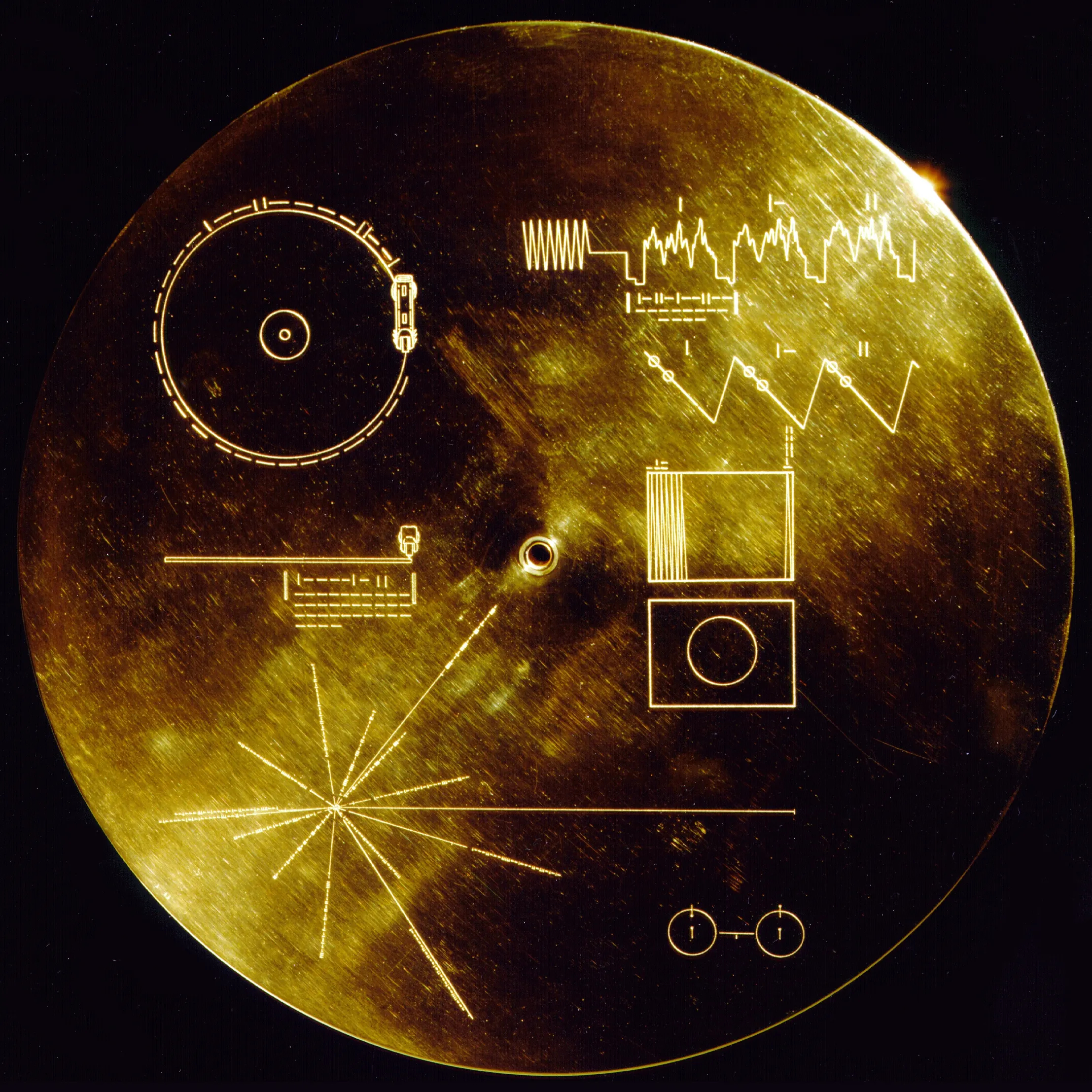
Episode 5: Logic, Self-Reference, and Category Theory
Once arithmetic can encode syntax, a system can act on descriptions of itself. That second engine produces Gödel sentences, quines, the Y combinator, recursive types, and Lawvere’s fixed point theorem.
-

Episode 6: Life as a Double Fixed Point
Living systems are not fixed points in the naive sense but robust attractors and self-reproducing machines, whose encoded description takes part in their own continuation.
-
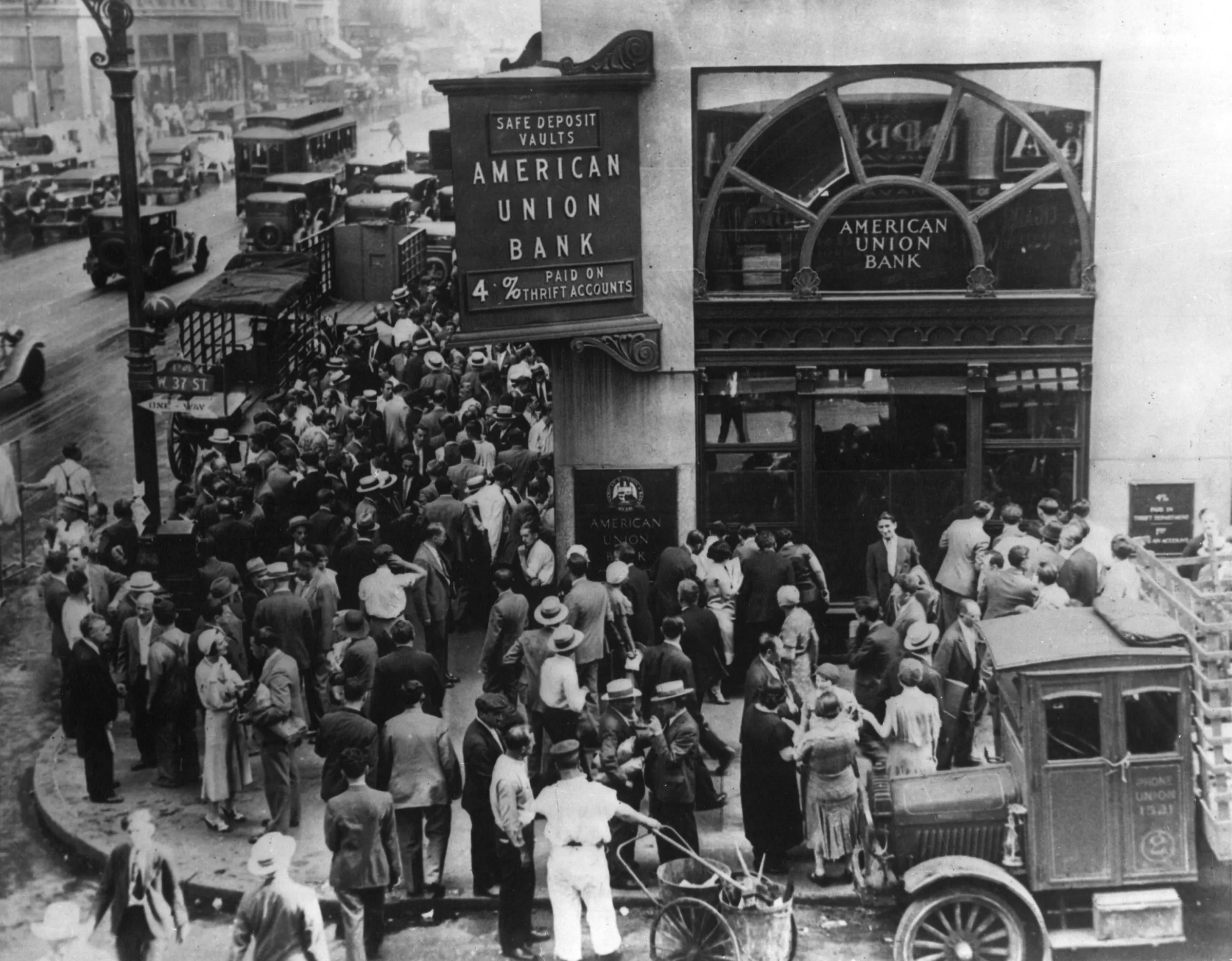
Episode 7: Markets as Reflexive Fixed Points
Markets are more than noisy aggregators of information: beliefs about prices help determine prices, which makes reflexivity a fixed-point problem with fat tails, non-ergodicity, and hysteresis.