Reading Backlog
← Back to reading recommendations
What I want to read next, not yet ranked.
Read Soon
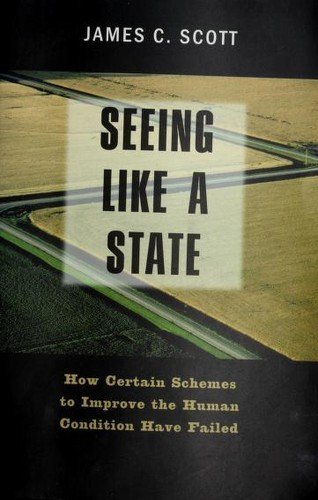 Seeing Like a State
Scott on how states simplify complex realities to make them legible and controllable, and the catastrophes that follow. Essential for anyone building systems that govern human behavior.
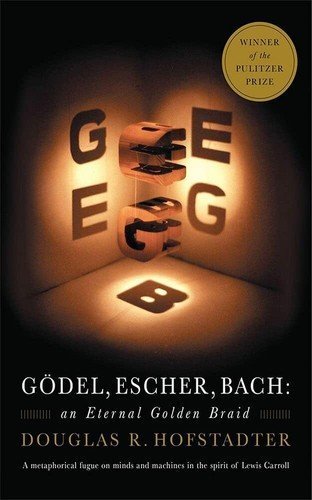 Gödel, Escher, Bach
Hofstadter on self-reference, formal systems, and consciousness. How meaning emerges from meaningless symbols. The book that launched a generation of interdisciplinary thinking.
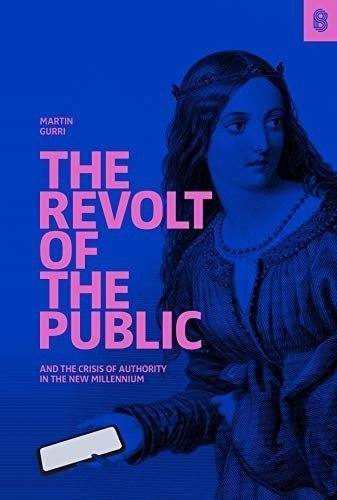 The Revolt of the Public
Gurri on how the information revolution destroyed the authority of institutions without replacing them. The best framework for understanding the last decade of politics.
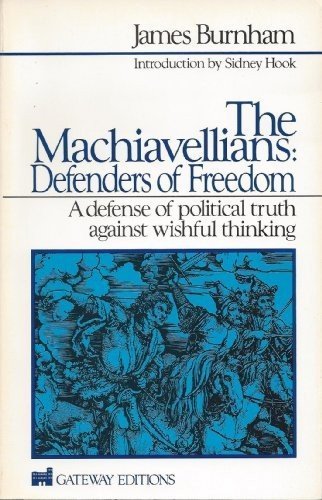 The Machiavellians
Burnham on the elite theorists (Mosca, Pareto, Michels) who argued that all political systems are oligarchies regardless of ideology. Power analysis without illusions.
 Nonlinear Dynamics and Chaos
Strogatz's textbook on dynamical systems. The mathematical foundations of how complex behavior emerges from simple rules. Prerequisite for thinking seriously about complexity.
 The Maniac
Labatut on von Neumann, the hydrogen bomb, and the birth of modern computation. Fictionalized history where genius and madness are indistinguishable. The intellectual ancestry of everything we are building now.
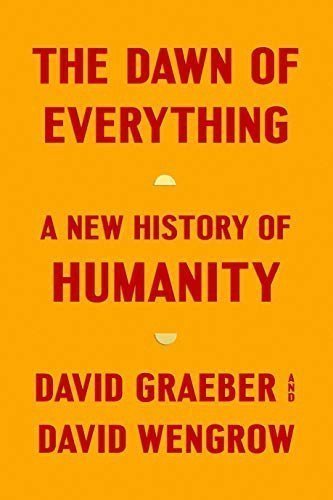 The Dawn of Everything
Graeber and Wengrow rewrite the standard narrative of human prehistory. Societies were not stuck on a ladder from bands to states. Political organization was always a choice, and people knew it.
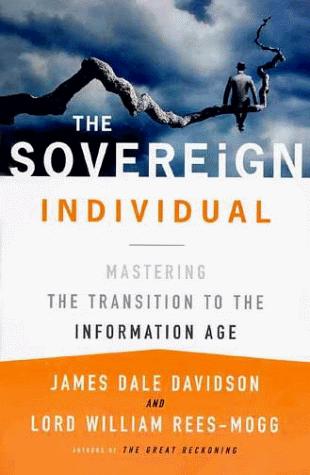 The Sovereign Individual
Davidson and Rees-Mogg predicted in 1997 that digital technology would erode the nation-state's monopoly on violence and taxation. Written before Bitcoin, more relevant after it.
 Chip War
How semiconductors became the most contested technology on earth. The geopolitical history of chips, from Texas Instruments to TSMC, and why the US-China competition over fabrication capacity is the defining industrial conflict of this era.
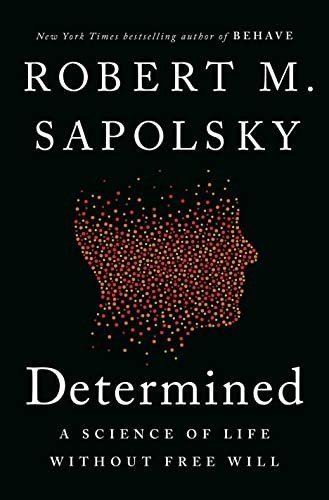 Determined
Sapolsky's full case against free will, drawing on neuroscience, genetics, and evolutionary biology. Rigorous and readable. If he is right, every system of punishment and reward needs rethinking.
Eventually
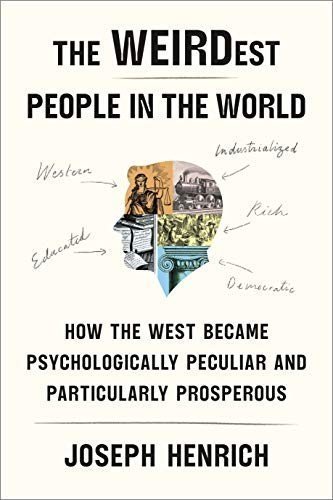 The WEIRDest People in the World
Henrich on how Western, Educated, Industrialized, Rich, Democratic psychology became the global default. The Catholic Church's marriage policies as the origin of individualism. Changes how you see institutions.
 Debt: The First 5,000 Years
Graeber on how debt preceded money, not the other way around. Moral obligation, violence, and the institutional machinery that turns human relationships into accounting. Pairs with The Dawn of Everything.
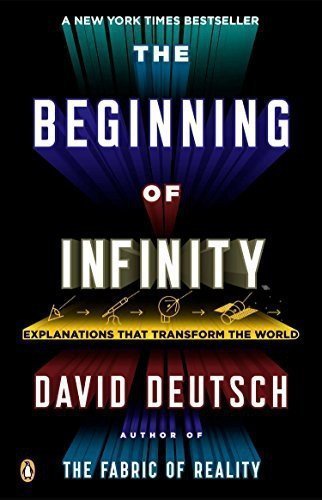 The Beginning of Infinity
Deutsch on knowledge creation, the nature of explanation, and why progress has no limit. The most optimistic serious book about the future of civilization.
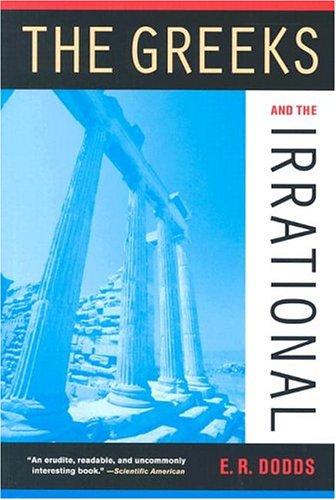 The Greeks and the Irrational
Dodds on the role of irrationality, madness, and divine possession in Greek culture. The counterargument to the myth of Greece as pure rationalism.
 When We Cease to Understand the World
Labatut's earlier work. Fictionalized accounts of Schwarzschild, Heisenberg, Grothendieck, and others at the edge of knowledge. Science as encounter with the incomprehensible. Bridges genius and madness beautifully.
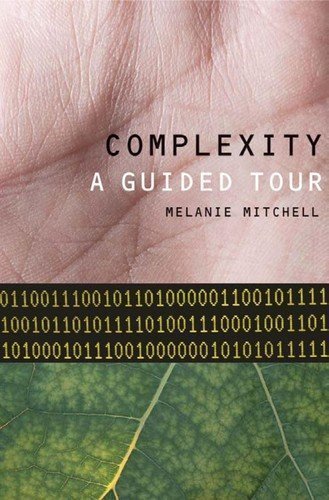 Complexity: A Guided Tour
Melanie Mitchell's accessible introduction to complexity science. Emergence, self-organization, and computation in biological and social systems. From the Santa Fe Institute tradition.
 Meditations
Marcus Aurelius writing to himself about duty, impermanence, and self-governance. A Roman emperor's private journal. The companion piece to Epictetus.
 History of Western Philosophy
Russell's opinionated survey from the pre-Socratics to logical positivism. Better as intellectual history than neutral philosophy. The prose alone is worth reading.
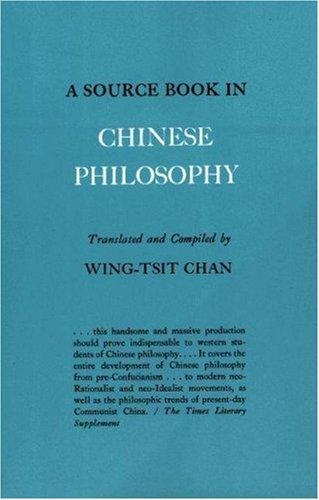 A Source Book in Chinese Philosophy
Wing-Tsit Chan's anthology of primary texts from Confucius through neo-Confucianism. The standard entry point for engaging with Chinese philosophical traditions directly.
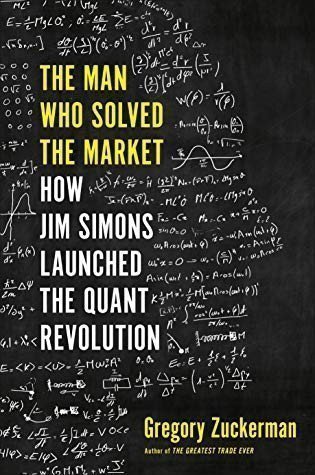 The Man Who Solved the Market
The story of Jim Simons and Renaissance Technologies. How a mathematician built the most successful hedge fund in history using signal processing, not financial theory.
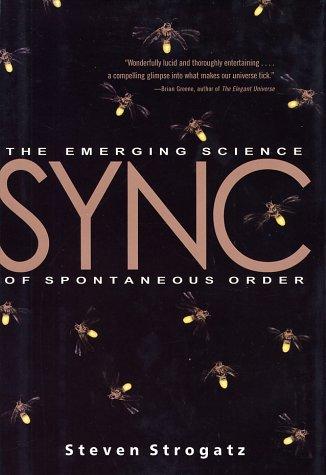 Sync
Sync
Strogatz on spontaneous synchronization in nature. Fireflies, neurons, bridges, and planets all following the same mathematical patterns. How order emerges without a conductor.
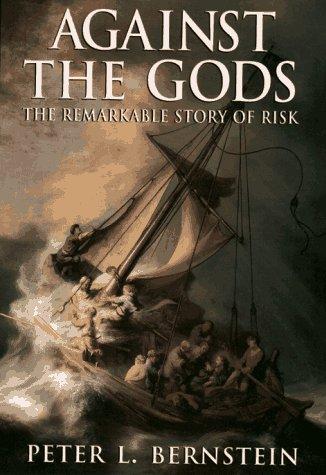 Against the Gods
Bernstein's history of risk. From ancient gambling to modern financial theory. How humanity learned to quantify uncertainty and what that changed about institutions and decision-making.
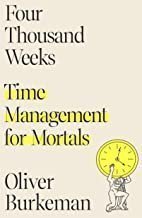 Four Thousand Weeks
Burkeman on time, finitude, and the impossibility of optimization. The argument that productivity culture is a defense mechanism against mortality. Philosophy of time that actually lands.
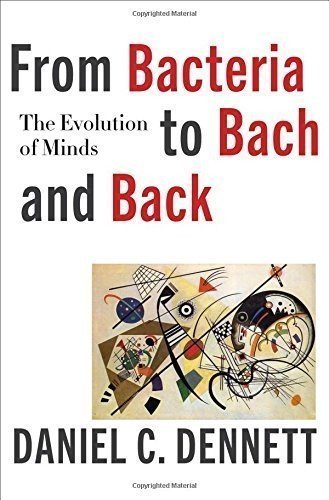 From Bacteria to Bach and Back
Dennett on how minds, meaning, and culture evolved from mindless processes. Competence without comprehension as the engine of both biology and technology.
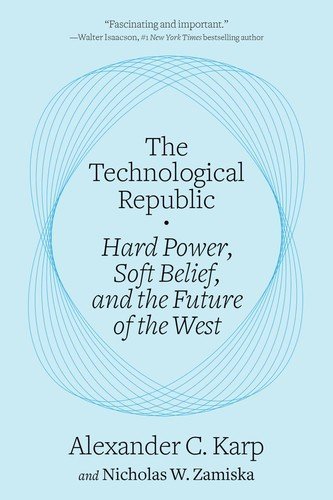 The Technological Republic
Alex Karp (Palantir CEO) on the relationship between technology companies and democratic governance. The argument that defense tech is inseparable from political freedom.
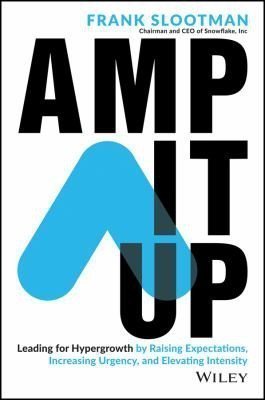 Amp It Up
Frank Slootman on operational intensity. The CEO of Snowflake, Data Domain, and ServiceNow on raising the bar, cutting complexity, and refusing to accept mediocre performance.
 The Sociology of Philosophies
Collins maps the entire global history of philosophy as networks of intellectuals competing for attention space. The big picture of how ideas actually develop: not lone geniuses, but rival groups in structural positions.
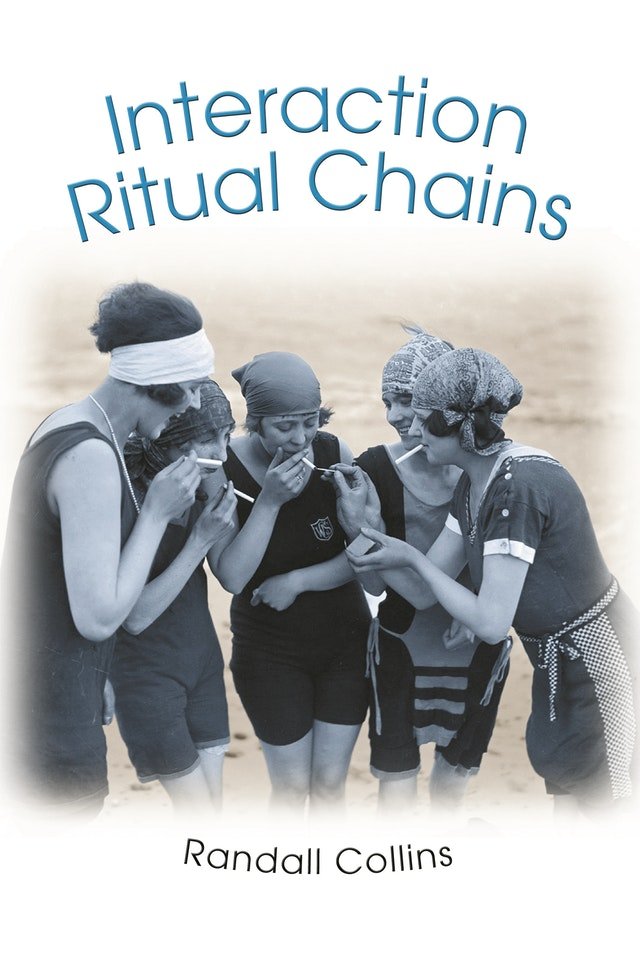 Interaction Ritual Chains
Collins' theoretical core. All of social life reduces to interaction rituals that generate emotional energy and group solidarity. A microsociological engine that powers everything from conversations to revolutions.
 The Age of AI
Kissinger, Schmidt, and Huttenlocher on AI's implications for society, security, and the global order. The geopolitical perspective on artificial intelligence from establishment thinkers.